Details
Format: Paperback
ISBN: 9782360574216
Collection: 80 mots du monde
12 x 18 cm
Weight: 185 gr
Pages: 184
First publication: 05/02/2026
CLIL: 3718
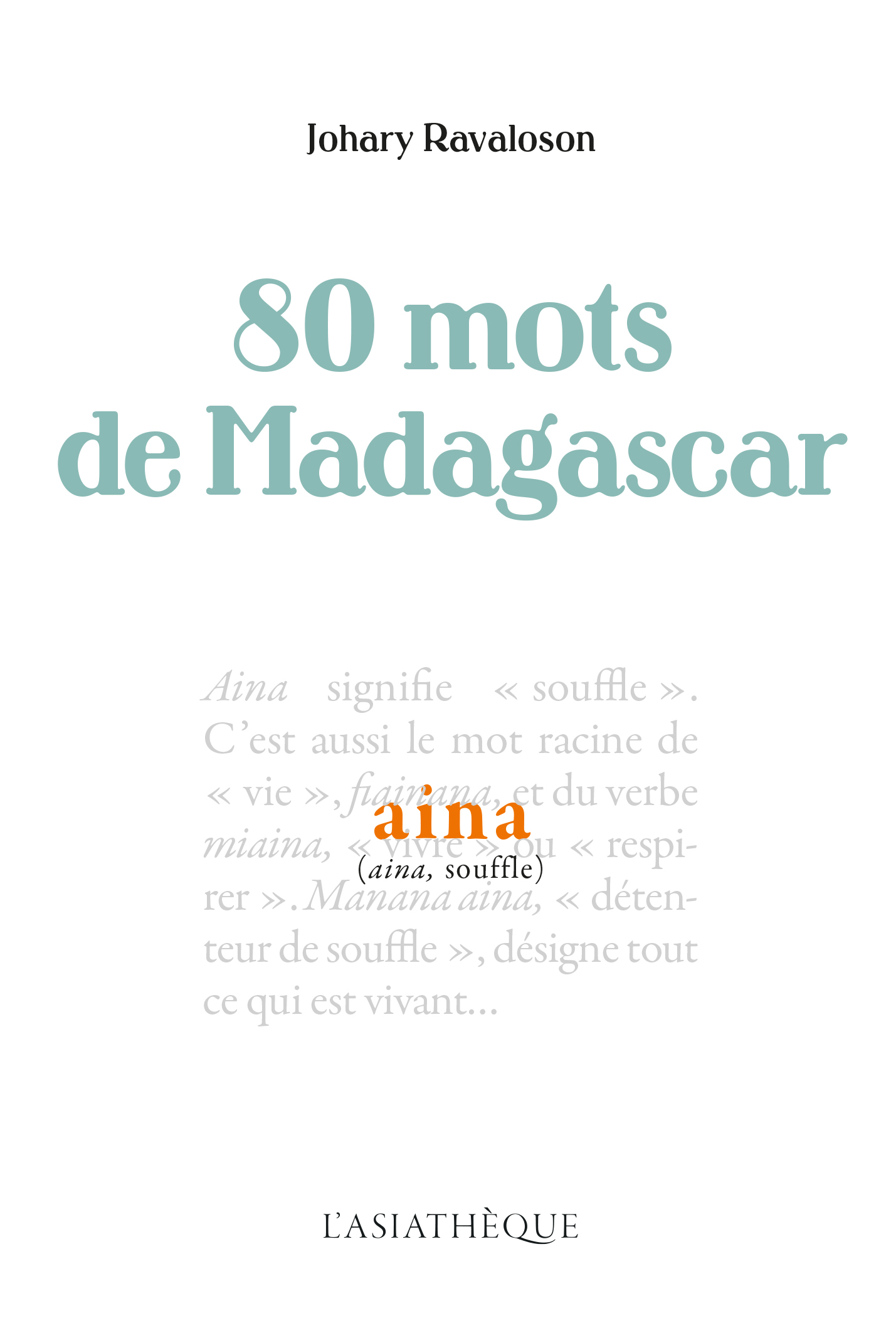
In his book 80 mots de Madagascar, Johary Ravaloson, a prominent figure among Malagasy writers, invites readers on a journey through his country, Madagascar, using 80 Malagasy words. He introduces his book as follows: "Here you will find a little of the spice of the language, some of the colours of the landscape, remarkable trees, strange concepts, a lot of historical insight (because I cannot talk about my country without talking about its history), my frustrations (because one thing or another is not quite right), and a few snapshots of life. I am counting on the magic of words to carry you away. Ny teny toy ny atody, ka raha foy manana elatra “Words are like eggs: once hatched, they fly away”. Hold on tight."
 buy
buyPRESS REVIEW
... With 80 mots de Madagascar, the author offers much more than a lexical collection: an invitation to listen to a living language, to grasp its genius, and to recognize the richness of an intangible heritage of rare depth. ...
... With a preface by Claire Paulhan, this collection showcases the richness of the Malagasy language and reveals a culture based on mutual aid and brotherhood. ...
... From Alefa! (Come on!) to Zavatra (thing), author, translator, and editor Johary Ravaloson immerses us in the words of Madagascar, illustrating them with historical facts and personal anecdotes. ...
CONTRIBUTORS' BIOGRAPHIES
Johary Ravaloson

Johary Ravaloson, born in Antananarivo, writes, translates, and edits. Co-founder of Dodo vole publishing house in 2006, he promotes the arts and literature of the southwestern Indian Ocean with works that are often bilingual and aimed at young people. He particularly enjoys fiction. His latest novel, Tribunal des cailloux, was published by Dodo vole in 2024.
© Odile Motelet
Claire Paulhan
Born on December 22, 1955, Claire Paulhan is a French publisher specializing in autobiographical literature. The granddaughter of Jean Paulhan, she initially worked for several publishing houses, including Seghers, Ramsay, and Verdier. In 1996, she founded her own publishing house and developed an editorial line focused on personal writings: memoirs, diaries, correspondence, and autobiographical texts. Her work highlights authors from the 19th and 20th centuries, often through unpublished documents, thus contributing to the dissemination and preservation of rare literary sources. Claire Paulhan has also been a project manager at the Institut Mémoires de l'Édition Contemporaine (IMEC).
TABLE OF CONTENTS
Preface by Claire Paulhan
Author's foreword
1 Alefa ! • Allez !
2 Lalamby • Voie ferrée
3 Dia • Voyage
4 Fiadanana • Bonheur
5 Fandriampahalemana • Paix
6 Very • Perdu
7 Malagasy • Population, langue de Madagascar
8 Soratra • Écriture
9 Hainteny • Genre poétique
10 Kabary • Art du discours
11 Tsiny • Blâme menaçant
12 Sorabe • Grande écriture
13 Boky • Livre
14 Fihavanana • Lien entre les vivants
15 Razana • Ancêtres
16 Tanindrazana • Patrie ou Terre des ancêtres
17 Madagasikara • Madagascar
18 Anarana • Nom
19 Fanagasiana • Malgachisation
20 Eny / Tsia • Oui/Non
21 Délestage • Coupure d’électricité
22 Rano • Eau
23 Zoma • Vendredi
24 Omby • Zébu
25 Barea • Zébu sauvage
26 Vary • Riz
27 Ranovola • Eau d’argent
28 Madajazzcar • Festival de jazz
29 Labiera • Bière
30 Toaka gasy • Rhum artisanal
31 Valiha • (instrument de musique)
32 Fady • Tabou
33 Fozaorana • Crabes écrevisses / Corrompus
34 Kolikoly • Corruption
35 Ariary • Nom de la devise nationale
36 Ady gasy • À la malagasy
37 Tromba • Possession
38 Ditra • Débauche
39 Ramanenjana • Transe collective et dansée
40 Ravinala • Arbre du voyageur
41 Rofia • Raphia
42 Saribao • Charbon
43 Doro-tanety • Feu de brousse
44 Ala-olana • Solutions
45 Nifin’akanga • Dents de pintade
46 #Zakoa • #Metoo
47 Lavanila • Vanille
48 Vazaha • Étranger, Blanc
49 Rivodoza • Cyclone
50 Tsy kivy • Inébranlable
51 Biriky • Briques
52 Zoto • Zèle
53 Hanimpitoloha • Festin
54 Harendrina • Lampion/Illumination
55 Taom-baovao • Nouvel an
56 Niova fo • Au coeur changé
57 Mpiandry • Sentinelle
58 Mahagaga ! • Miraculeux !
59 Aina • Souffle
60 Ranomasina • Mer
61 Fanahy • âme/conscience/ego
62 Vazimba • Premiers occupants de l’Île
63 Rova • Enceinte royale
64 Rova may • Rova brûlé
65 Fahasamihafanaina • Biodiversité
66 Reniala • Baobab
67 Betsimisaraka • Les Nombreux Inséparables
68 Libertalia • Utopie pirate
69 Fanorona • (jeu de stratégie)
70 Zafimaniry • Peuple forestier
71 Takalo • Échange/Troc/Contrepartie
72 Vorona • Oiseaux
73 Ampamoaka • Grand déballage, révélation fracassante
74 KDNV, KMAMNN, KDRNN… • Gros mots
75 Embona • Mélancolie/Nostalgie
76 Mafana • Chaud
77 Fanantenana • Espérance
78 Mahaleo • Libre, capable
79 Raokandro • Salutaires
80 Zavatra • Chose
Postface, ou le boomerang des mots
COLLECTION
80 mots du monde
ISSN : 2650-4790New books / Upcoming
€29.50
€16.50
€20.00
€11.50
€22.50

€19.50
€16.50
€29.50
€16.50